Danish Roast Pork with Crispy Crackling (Flæskesteg med Sprød Svær)
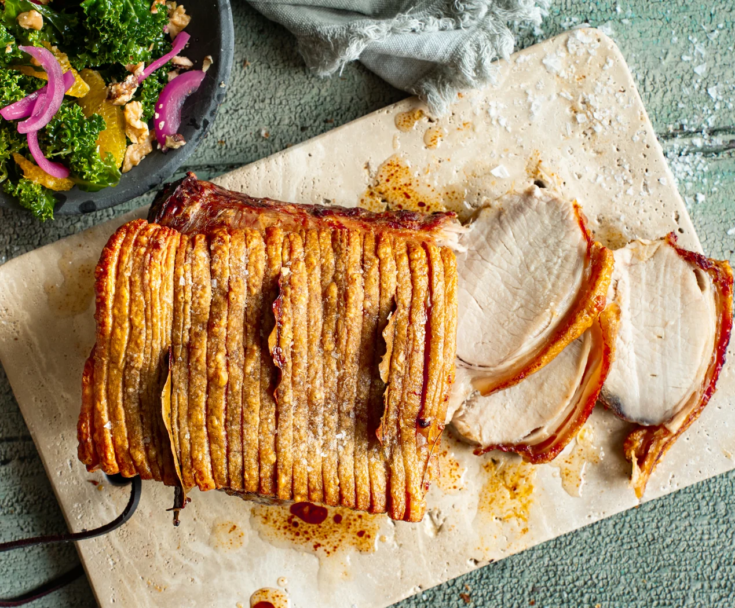
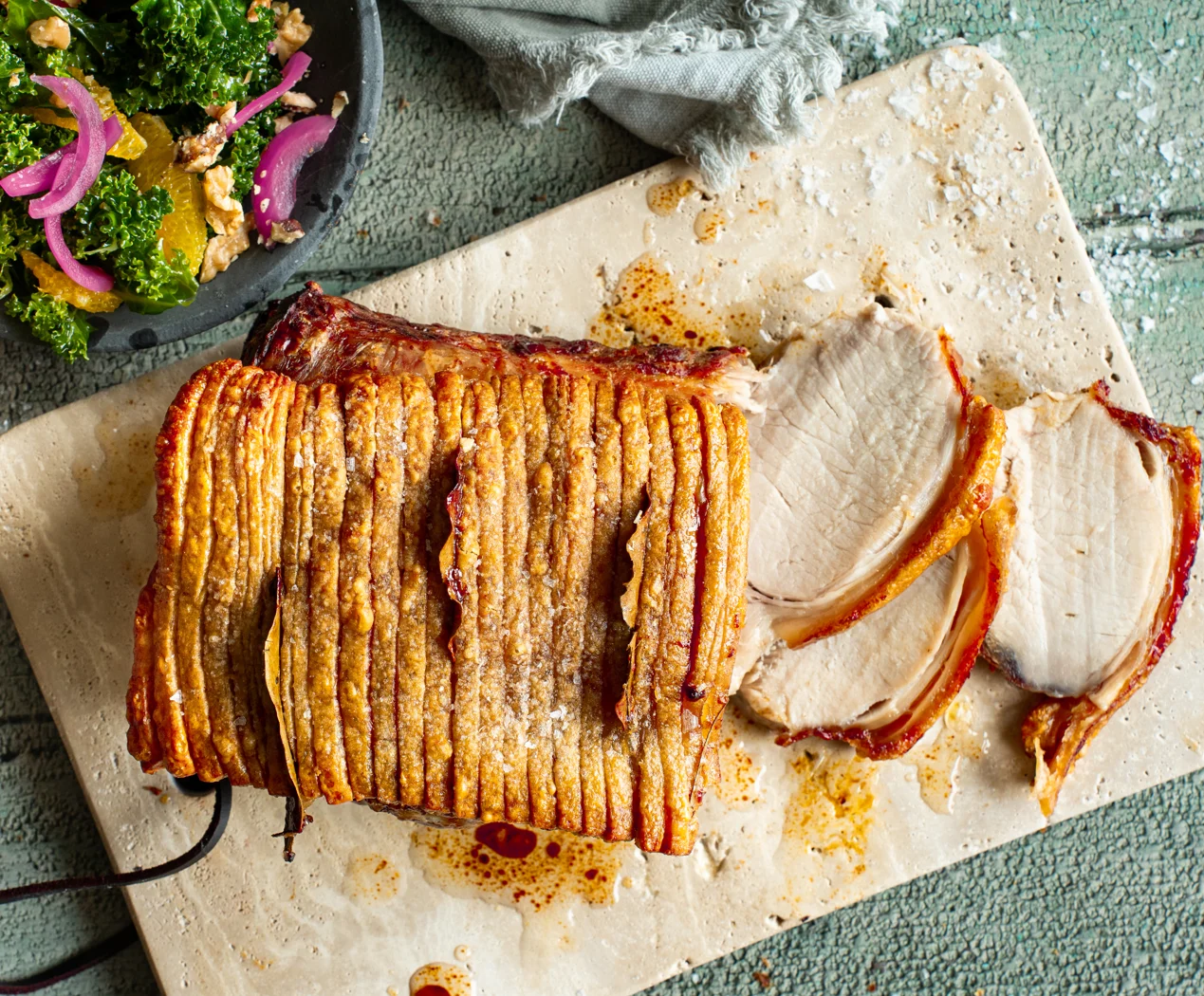
Few dishes are more iconic in Denmark than flæskesteg—roast pork with perfectly crispy crackling. A centerpiece of the Danish Christmas table, it's also enjoyed throughout the year and makes fantastic leftovers for sandwiches and open-faced rye bread.
Ingredients
- 4.4 lbs (2 kg) pork loin roast with scored rind/crackling attached
- 2 tsp fine salt
- 2 cups (500 ml) boiling water
- 1 tsp fine salt
Instructions
Step 1: Prepare the Crackling
Preheat the oven to 400°F (200°C) convection.
For crispy crackling, it is important that the rind is scored all the way through the skin and fat, including the sides, but not into the meat itself.
Rub the rind thoroughly with salt, making sure the salt gets deep between all the cuts.
Let the roast sit for 20 minutes.
Step 2: Start the Roast
Place the roast in a roasting pan with the rind facing down.
Pour boiling water into the pan until the rind is submerged.
Roast for 20 minutes.
Step 3: Turn and Level
Remove the roast and turn it rind-side up.
Place it on a rack if available.
The rind should sit as level as possible. Danish cooks often place a piece of potato beneath one end of the roast to level it.
Rub the rind with the remaining salt.
If making gravy later, you may add:
- Bay leaves
- Thyme
- Onions
- Other herbs
to the roasting liquid.
Step 4: Finish Roasting
Continue roasting at 400°F (200°C) convection for approximately 1½ hours, depending on size.
Check the crackling after about 1 hour.
If it is not becoming crisp:
- Increase the temperature to 475°F (250°C) for the final 20–30 minutes.
For extra bubbly crackling:
- Switch to the broiler/grill setting at 435–475°F (225–250°C) for about 10 minutes.
- Watch carefully to prevent burning.
Step 5: Rest
Remove from the oven and let rest uncovered for 15–20 minutes.
The internal temperature will continue to rise during resting.
- Slightly pink and juicy: 149°F (65°C)
- Fully cooked: 158°F (70°C)
Slice and serve.
Notes
The Secret to Crispy Crackling
The two most important factors are:
✅ Salt worked deep into every score line
✅ A perfectly level rind during roasting
If one side sits lower than the other, the crackling often crisps unevenly.
Using a Meat Thermometer
For the juiciest pork:
- Insert the thermometer into the center of the roast.
- Begin checking the crackling when the meat reaches 131°F (55°C).
If the crackling is already crisp:
- Continue cooking until 149°F (65°C).
If the meat reaches 149°F (65°C) but the crackling isn't crisp:
- Remove the crackling and place it under the broiler separately.
- Wrap the roast loosely in foil to keep warm.
Pork Loin vs. Pork Belly
Traditional Danish ribbensteg (pork belly roast) contains much more fat than pork loin and is more forgiving.
Because of the higher fat content, it is difficult to dry out, although longer cooking will cause greater shrinkage.
Serving Suggestions
Classic Danish accompaniments include:
- Boiled potatoes
- Caramelized potatoes
- Red cabbage
- Brown gravy
- Pickled cucumbers
- Rye bread for leftovers
Recipe source: Arla.dk