Rustic Whole Grain Barley Bread (Grovt byggbrød)
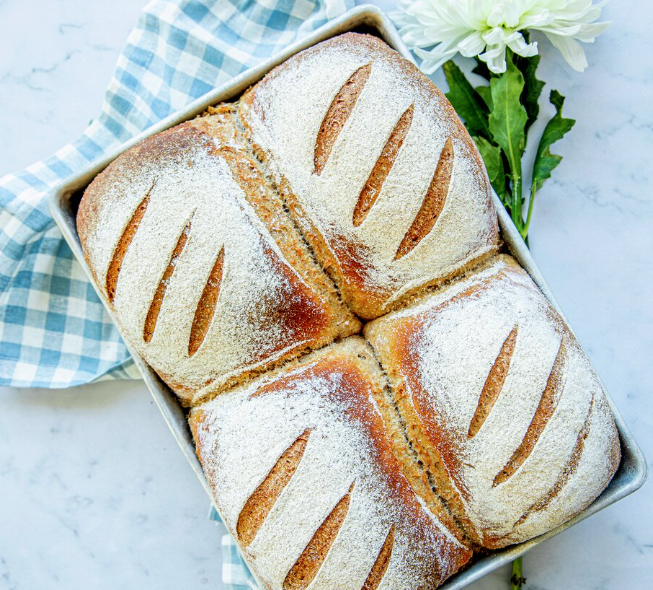
A moist and flavourful everyday bread made with barley. Barley is one of Norway’s ancient grains and gives this bread a wonderful nutty grain flavour while helping it stay beautifully moist. A fantastic, hearty bread for everyday meals.
Ingredients
Overnight Pre-Dough
- 2 g fresh yeast (0.07 oz), approximately a pea-sized piece
- 500 ml water (2 cups + 2 tbsp)
- 400 g barley flour (approximately 3½ cups)
- 200 g whole wheat flour (approximately 1⅔ cups)
Main Dough
- 700 ml water (approximately 3 cups)
- 800 g all-purpose flour (approximately 6⅔ cups)
- 200 g whole wheat flour (approximately 1⅔ cups)
- 200 g barley flour (approximately 1¾ cups)
- 120 g dark syrup (approximately ⅓ cup)
- 30 g salt (approximately 5 tsp)
- 25 g fresh yeast (0.9 oz)
- Note: US cup measurements for flour are approximate. For the best and most consistent bread-baking results, measuring flour by weight is recommended.
Instructions
1. Prepare the Pre-Dough
The day before baking, stir the fresh yeast into the water in a large mixing bowl.
Add the barley flour and whole wheat flour and mix until evenly combined.
Cover the bowl with plastic wrap or a reusable cover and leave the mixture at room temperature overnight.
2. Make the Main Dough
The next day, add the remaining water to the pre-dough.
Add the dark syrup, salt and fresh yeast, then gradually knead in the barley flour, whole wheat flour and most of the all-purpose flour.
Hold back a little of the all-purpose flour at first so you can add more only if the dough needs it.
Knead the dough thoroughly by hand or using a stand mixer fitted with a dough hook. When using a mixer, begin at low speed and gradually increase the speed as the dough comes together.
Add a little more flour if necessary.
To check whether the dough has been kneaded enough, use the windowpane test: Take a small piece of dough, gently roll and stretch it between your fingers. If you can stretch the dough thinly without it immediately tearing, it is ready.
3. Let the Dough Rise
Cover the mixing bowl and place it somewhere warm.
Allow the dough to rise until doubled in size, approximately 1 hour.
4. Divide and Rest the Dough
Lightly flour your work surface and turn the dough out of the bowl.
Divide it into four equal pieces.
Gently knead each portion and shape it into a round.
Cover the dough pieces with a clean kitchen towel and allow them to rest on the work surface for 10–20 minutes.
5. Shape the Loaves
Shape each piece of dough into an oval loaf.
Lightly grease a large ovenproof baking dish or baking pan with oil and arrange the loaves inside.
If the loaves are touching, brush a little oil between them. This will make it easier to separate the loaves after baking.
6. Final Rise
Cover the loaves with a clean kitchen towel and leave them to rise again until doubled in size.
Brush the tops lightly with water.
Sift or sprinkle a little barley flour over the top of each loaf, then score the loaves with a sharp knife or bread lame.
7. Bake
Preheat the oven to 220°C (425°F).
Bake the loaves on the lowest rack of the oven for 35–50 minutes, or until golden brown.
Carefully remove the loaves from the baking dish or pan and return them directly to the oven rack for another 10 minutes. This helps the crust become firm and evenly baked.
To check whether the bread is done, tap the underside of a loaf. It should sound hollow.
Transfer the loaves to a wire rack and allow them to cool completely before slicing.
Notes
Barley has been cultivated in Norway for thousands of years and has traditionally played an important role in Nordic baking and everyday cooking.
Because barley contains less gluten than wheat, this recipe combines barley flour with wheat flour to create loaves that retain the distinctive flavour and moisture of barley while still developing enough structure to rise well.
The overnight pre-dough gives the flour time to hydrate and helps develop a deeper, more complex flavour.
This recipe makes four substantial loaves, making it perfect for batch baking. Once completely cooled, the extra loaves can be frozen for later.
Recipe and image source: Matprat.no